To Get Around ART RESIDENCE
Realised in cooperation with České Budějovice 2028, European Capital of Culture, as part of the European project CreArt.
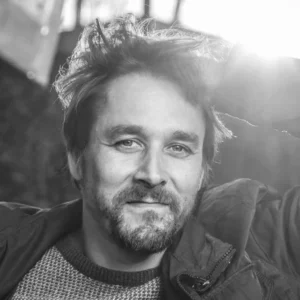
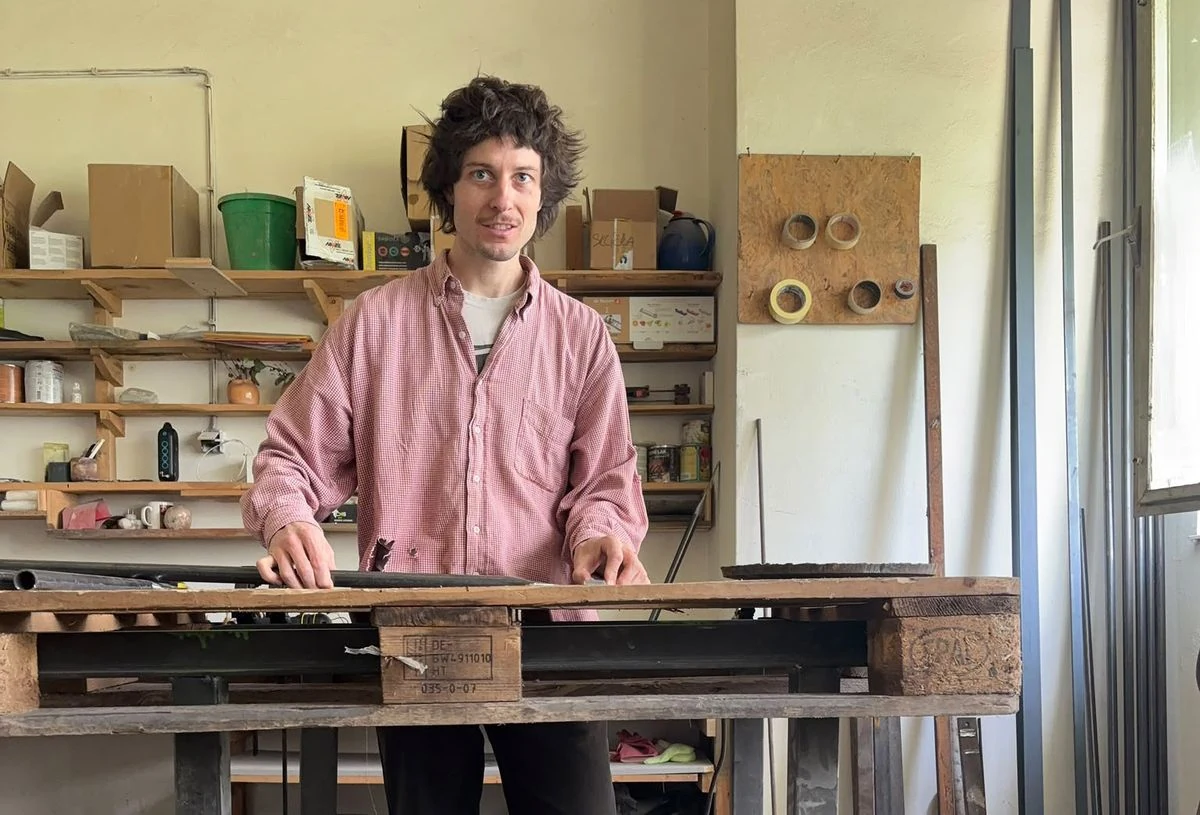
During a June creative residency by the French artist Simon Martin, a new work is taking shape, strongly informed by the environment of the city and by dialogue with the local community of people who have lived experience of disability.
In his work Simon Martin responds to lived experience of disability and to the (im)possibilities of movement in public space. Over the course of his residency he meets local residents who have that experience in a local context, holds a dialogue with them, responds to that experience and gives it prominence in the work created here in České Budějovice during the festival.
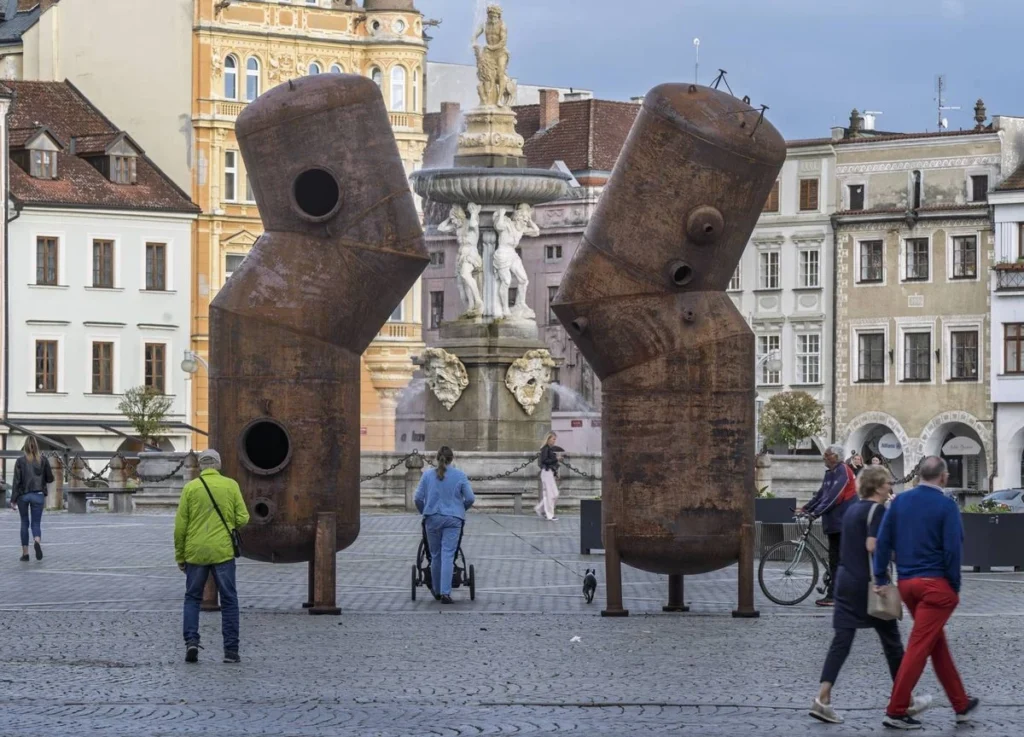
The residency produces a series of artistic “machines” — interactive metal sculptures inspired by mobility aids. The festival gives the public a rare chance to activate these objects, to use them and, through their own movement, to experience the bodily fragility that many people live with every day.
The sculptures examine support, (in)dependence, reliability, vulnerability, trust in technology and the frustration that arises when support fails. They also draw attention to the recurring tension between the body, technology and the environment around us. What is designed to support independence does not always fail because of the device itself. It is often the surrounding conditions that keep it from working as it should.
The resulting work created for this festival will be unveiled on 30 June 2026. The opening of Simon Martin's work will be accompanied by a supporting programme in the form of an accessible guided walk. This accessible walk will be extended by sign language interpretation. On this occasion it will also be possible to add a tactile experience to the picture of the installations given by the audio description.
What the sculpture looks like
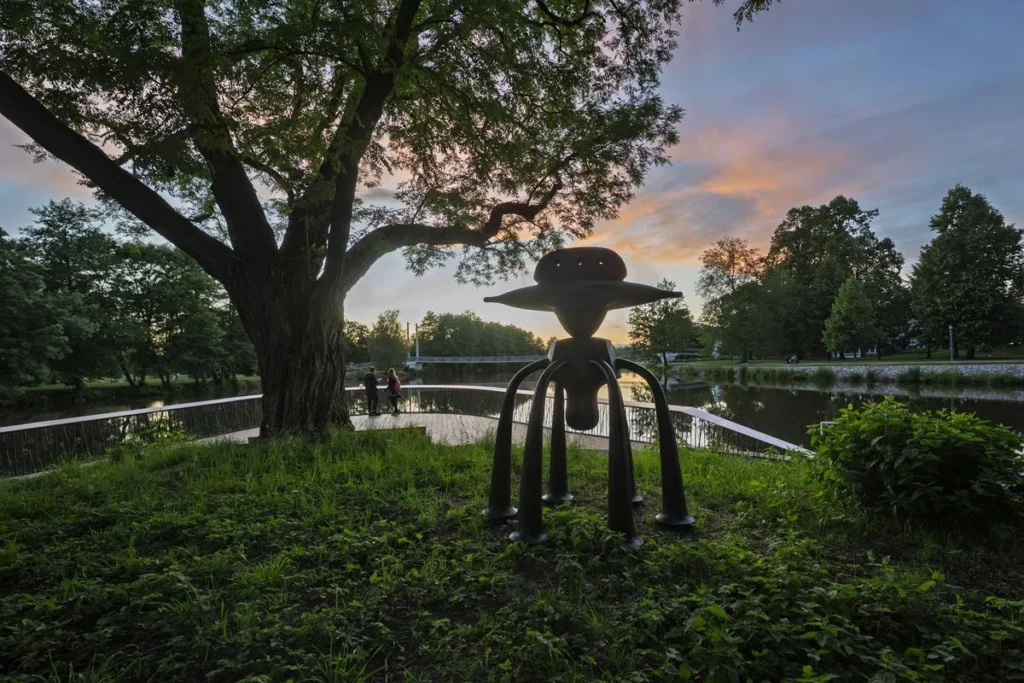
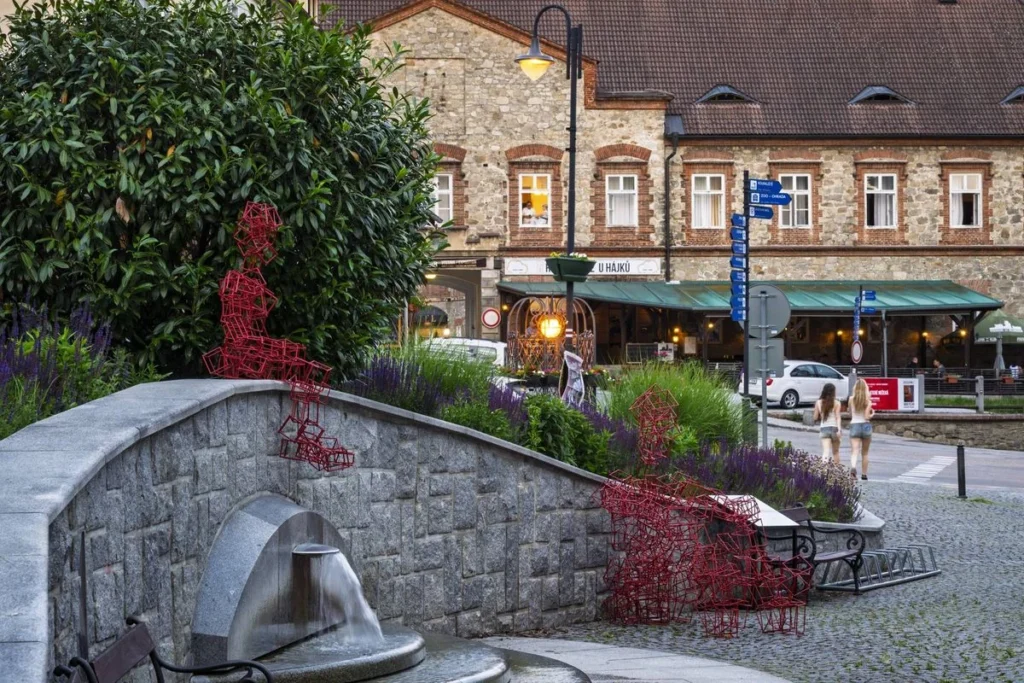
The work by Simone Martin does not belong to a single place. It begins its journey at Žižkárna, but the three metal objects will gradually appear in different parts of České Budějovice. They will move between places with different rhythms and purposes – cultural spaces, public areas and places of everyday life.
Each place changes the work. The sounds are different. So is the pace of the people passing by. The reasons why they are there differ too. In some places people come for art. Elsewhere they are simply on their way to work, to the shops or home.
What stands before you, then, is not only sculpture but also the situation it currently finds itself in. Someone walks past with shopping bags. Someone adjusts a heavy rucksack. Someone pushes a pram or accompanies a child. Another moves more slowly, more carefully, closer to the wall or beside another person.
It is clear that a body rarely moves through a city alone. It carries bags, responsibility, emotions or fatigue. Sometimes it also carries the weight of another body.
Everyday movement through a city can seem self-evident. In fact it is made up of countless small decisions and adjustments. You slow down, stop, avoid obstacles, choose the easier route, keep your balance or look for support. Simone Martin's work turns attention to precisely these everyday actions, which usually go unnoticed.
The work, titled To get around, consists of three metal objects. Each measures roughly 88 centimetres in height and 70 centimetres in width. They are made mainly of steel tubes 25 millimetres in diameter.
At first glance all three objects resemble mobility aids – walking frames or other devices that make movement easier. The artist calls them "machines". They recall the body, movement, effort and fragility. They do not depict a human figure directly. Yet the body is present in their scale, in the height of the handles, in the places meant for gripping and in the points of support. If you wish, you may touch them. You can try out how they work.
The work consists of three objects:
On all three objects the metal is silvery and glossy, but it does not read as smooth factory chrome. The surface of the tubes is uneven. Traces of welding, thickened areas, scuffs and darker patches are visible on it. Black rubber end caps, covers, hinges, wheels and connecting parts make them resemble ordinary mobility aids even more.
The first object recalls a simple rehabilitation walking frame or a support handle for walking. It has no seat, no backrest and no other panels. It is made of steel tubes, vertical supports, crossbars and rubber end caps.
It consists of two strongly bent frames, each recalling the rounded part of the letter "D". They are about 60 centimetres apart and run parallel to the ground. Three short vertical tubes connect them, passing downwards into three legs. Each leg ends in a black rubber cap. Where the vertical supports meet the upper frame, the tubes bend smoothly in a soft curve instead of forming right angles.
Just above the rubber caps, each leg is interrupted by a short black silicone insert fixed with small metal screws. These soft parts contrast with the rigid steel tubes and give the otherwise stiff structure a gentle springiness. The artist added them so that the principle of hypermobility could be experienced physically.
The second object recalls a wheeled walking frame. It feels more dynamic than the first. Seen from the side it has the shape of a widely opened letter "A" without the horizontal bar. One of the arms continues forward and passes smoothly into a handle meant for leaning on.
There are four wheels at the bottom. They are somewhat larger than the wheels of ordinary rehabilitation aids. They have neither spokes nor rubber tyres and resemble flat metal weights instead. About twenty centimetres above them a horizontal bar connects the two side frames, stiffening the structure.
The third object is the most complex of all. It recalls a folding rehabilitation walking frame. It consists of several rectangular and rounded frames connected by hinges, short links and crossbars. It looks as though it had been made from two walking frames set against each other with their handles facing. Each has two legs, so the whole structure stands on four legs ending in black rubber caps.
Three vertical metal elements connect the two parts, fixed with hinges and sleeves. It is precisely this connection that makes the structure deliberately unstable. When someone leans on it or sets it in motion, it begins to tremble gently and a quiet metallic rustling or rubbing of metal on metal can be heard.
All three objects keep a clearly recognisable shape of aids that make movement easier. They are not, however, ordinary utility objects. Their lines are subtly deformed. The wheels feel unusually heavy. Familiar shapes are quietly disrupted and the mechanisms remain visible.
Anyone can try them out. Lean on them. Set them in motion. Notice how they respond.
How to find the sculpture
These sculptures do not stay in one place – they travel around České Budějovice and appear at different locations over time. The first stop was Žižkárna. Each sculpture stands on four legs ending in black rubber caps. The artist explicitly invites visitors to touch them.
You may touch this sculpture