Beetles
concrete, ceramic mosaic, steel legs
zámek Hluboká – nedaleko jízdárny
Take a ride on the back of a beetle and discover life in the grass from a different perspective.
What the sculpture looks like
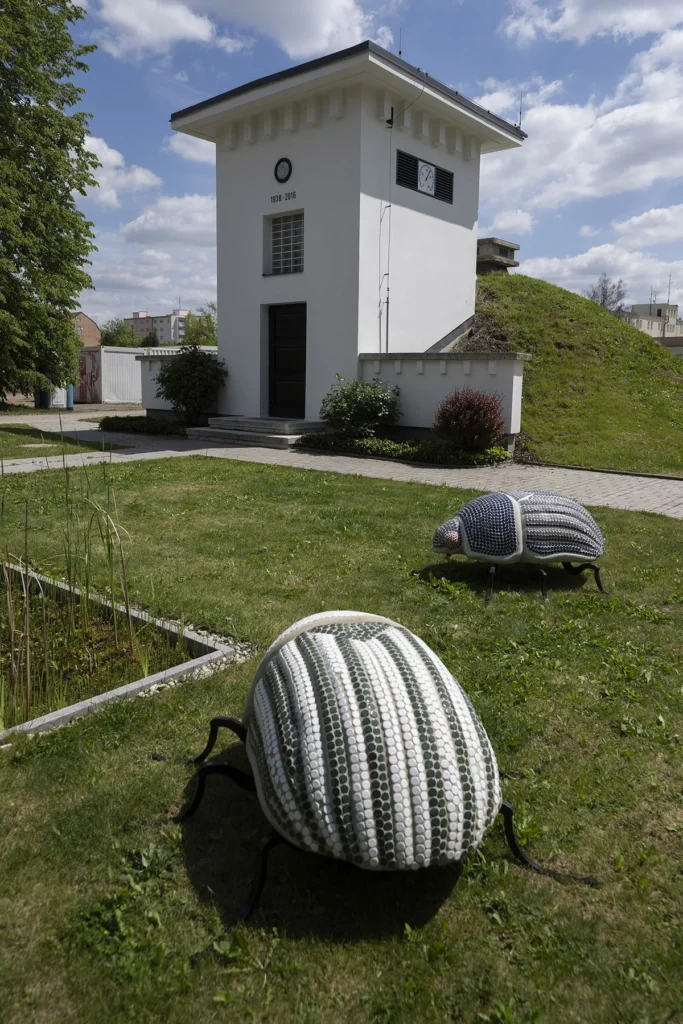
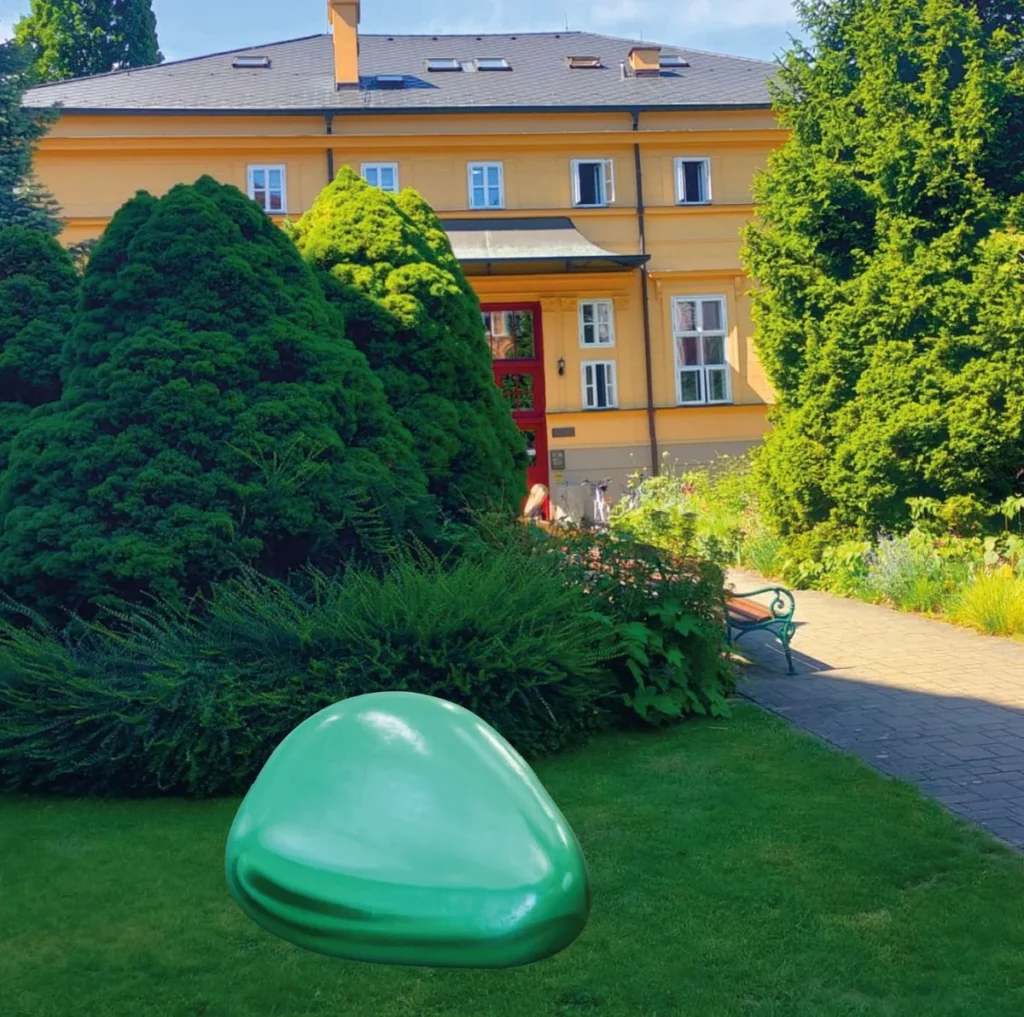
The group of sculptures is made up of three large representatives of the insect world: two beetles and a grasshopper. The objects stand on the lawn in the grounds of Hluboká chateau, not far from the riding hall. They are many times larger than real insects. Their scale makes it possible to look at them as inhabitants of the world of grass from very close up. As if a person had shrunk to the size of an ant and could meet the beetles face to face.
The sculptures are made of concrete, ceramic mosaic and thin steel legs. The concrete forms the massive rounded bodies of the insects. The ceramic mosaic covers their backs, heads and abdomens with small circular elements. The steel legs are black, thin and bent. Thanks to them the insects do not lie directly on the ground but hover just above the grass.
Most attention is drawn by the two beetles standing close together. They give the impression of having just set out towards each other. One faces the chateau, the other the opposite way. Both have low, wide bodies roughly one and a half metres long. Each consists of a large bulging abdomen and a smaller head. The abdomens have the form of tall rounded domes. They recall a carapace or a protective shell. They are rounded on every side and pass softly down towards the ground.
The surface of the beetles is covered with hundreds of small round ceramic pieces. They recall buttons, bottle caps or small mosaic tiles. They are arranged densely and in regular rows. Close up, the individual circles can be told apart. From a greater distance they merge into stripes, rhythms and patterns on the carapace.
The heads of the beetles are lower and smaller than their abdomens. They are strongly rounded and project from the front of the body. Bulging red areas sit at the sides of the head. They can be read as eyes. They are pronounced, round and immediately draw attention.
Each beetle stands on six black legs. The legs are thin, metal and sharply bent. They emerge from under the body and lift it above the grass. They are not treated realistically. They resemble bent metal rods rather than real insect limbs. They touch the ground at only a few points. Because of this the beetles feel light, even though their concrete bodies are large and heavy.
Both beetles are decorated with ceramic mosaic. Their bodies share a similar composition of patterns but differ in colour. Lengthwise stripes decorate the abdomens. On one beetle they are beige and green, on the other gold and red. The front parts of the carapaces are single-coloured areas, and the heads are single-coloured too. The first beetle has a beige carapace and a green head, the second a red carapace and a gold head.
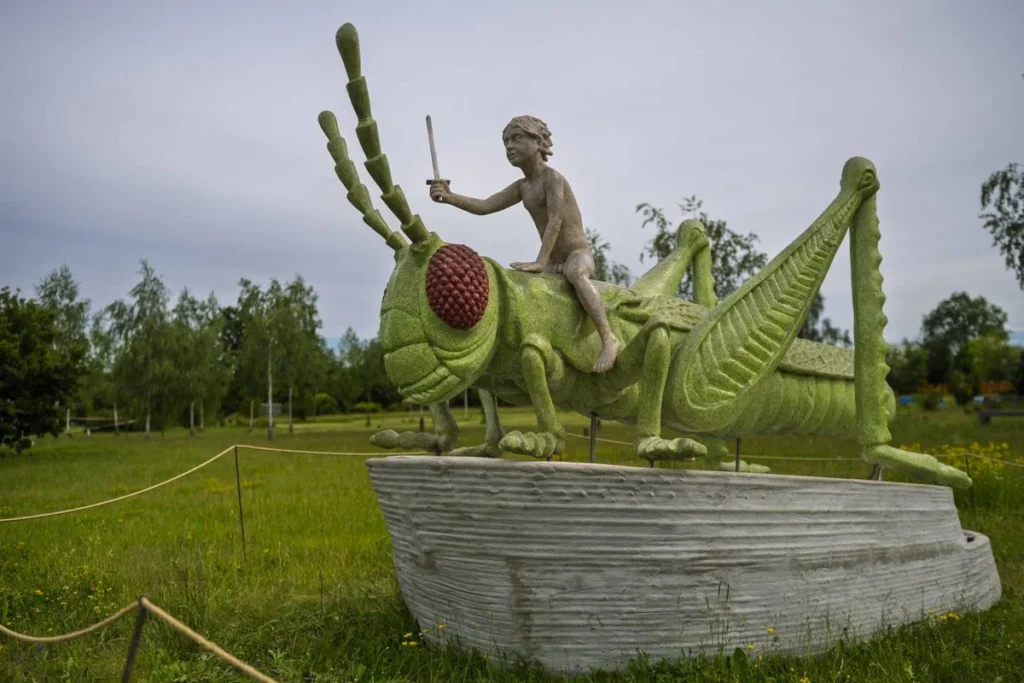
The third member of this group is a grasshopper. It has a longer and slimmer body than the beetles. Its silhouette is more stretched out in length. Its most striking feature is its long legs, especially the hind ones, adapted for jumping. While the beetles recall low domes on tiny legs, the grasshopper feels lighter and more linear. It is a sculptural idea of an insect rather than an exact depiction of one. It emphasises the insect's most characteristic marks – the elongated body, the strong hind legs, lightness and readiness to leap.
The grasshopper is decorated in metallic-looking colours. The front part of its body is silver, the abdomen gold. Its eyes are the same red as those of the beetles.
All three sculptures can be walked around on every side. Visitors can compare their shapes, colours and patterns, and perhaps count the ceramic dots on their carapaces. The organisers of the Art in the City festival invite visitors to "be carried away on the back of a little beetle and discover life in the grass from a different perspective".
How to find the sculpture
The grounds of Hluboká nad Vltavou chateau – near the riding hall. The objects stand on the lawn, each beetle on six black legs, so they hover just above the grass. The two largest beetles stand close together.
You may touch this sculpture