Given the size of the exhibition sites and the number of sculptures on show, the sixth edition of “Art in the City” is probably the largest open-air survey of monumental contemporary Czech sculpture in the Czech Republic. The exhibition opened on 12 June at 18:00 on náměstí Přemysla Otakara II in České Budějovice. It was introduced by Michal Trpák, with music by the band Strong Coffee.
As in previous years this is above all a sculpture exhibition — objects of monumental scale that once again enrich, complete or make strange the familiar spaces of České Budějovice and, newly, the spaces at Hluboká. The sculptures are part of the chosen locations throughout the summer of 2013, confronted not only with the space around them but above all with the viewer — lovers of art, the general public and tourists alike. That is the main contribution of an exhibition in public space: the city and its parks become an open-air gallery and art comes to the viewer in their own natural space, rather than the viewer coming to art, as happens in a gallery.
For 2013, 14 sculptors have agreed to take part in this exceptional exhibition, from across styles and generations, but united by an enthusiasm for working with varied materials and turning them into monumental sculptural objects. The most monumental work, and the most demanding to install and transport, is the lookout tower nicknamed “Pine Cone” by Čestmír Suška, made specially for this exhibition. It belongs to the family of valley lookout towers you can climb up and down while watching the horizon change. The sculpture was made from an abandoned tank that was lying in a field in the village of Slavětín near Trutnov.
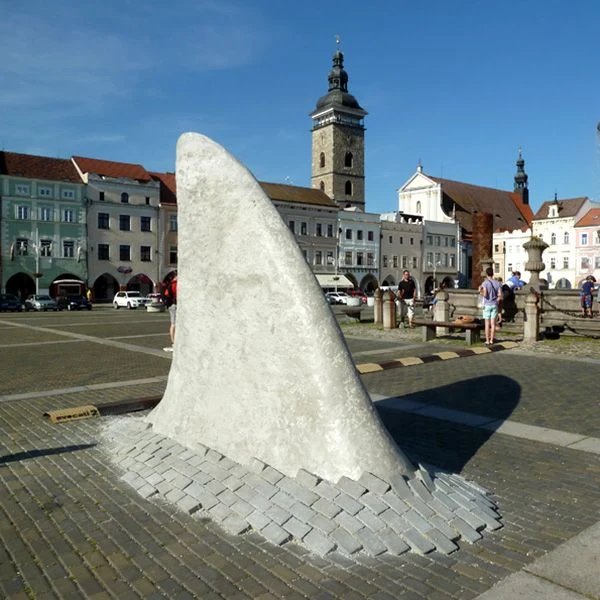
Another sculpture, installed on the main square, is Jaroslav Chramosta's “Predator” — a predator in which we may sense a shark swimming beneath the paving of the square, its dorsal fin splitting the stones and glowing into the dark at night.
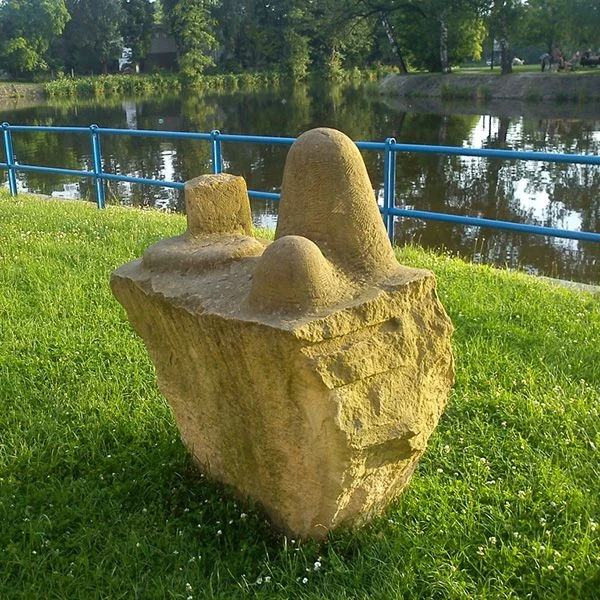
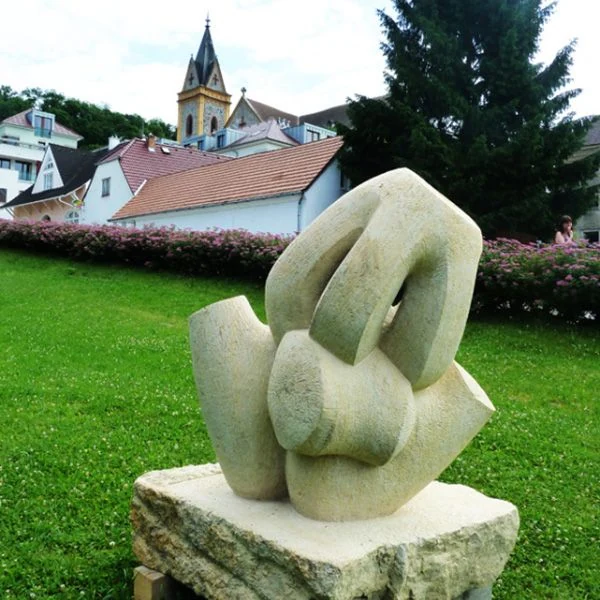
On Zátkovo nábřeží there is a small sculpture that holds a story: “Landscape” by Václav Krčál.
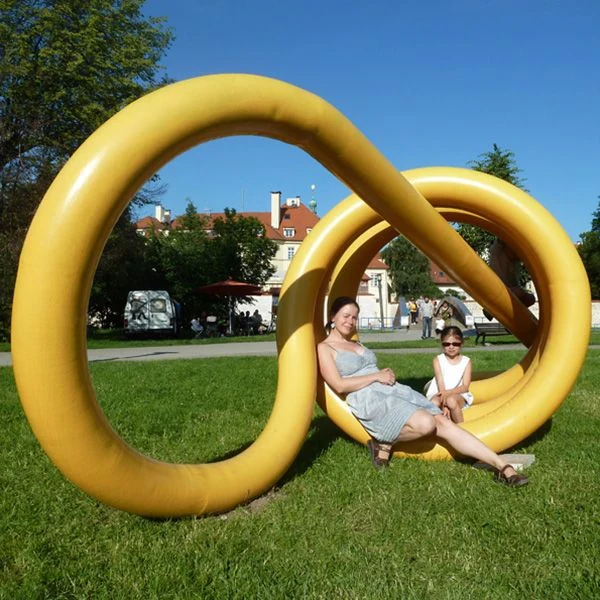
Crossing the bridge to Sokolský ostrov we come to “Cigarette End in the Dark”, enlarged to monumental scale by Václav Fiala, glowing with its yellow colour and dynamic curve even by day.
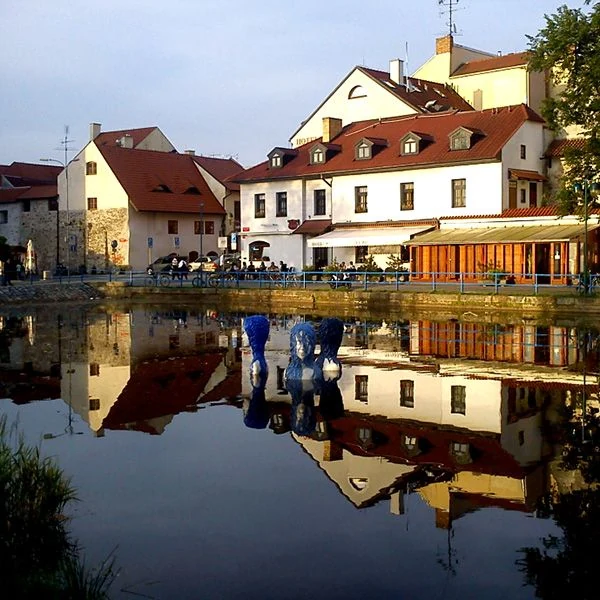
On the blind arm of the Malše, the “Three Graces” have this year replaced Eliška the octopus — charming to some, terrifying to others — who guarded these waters last year. Radek Andrle's sculptures represent the Greek goddesses of grace and beauty and, together with the Muses on the water, will dance on the surface of the river all summer.
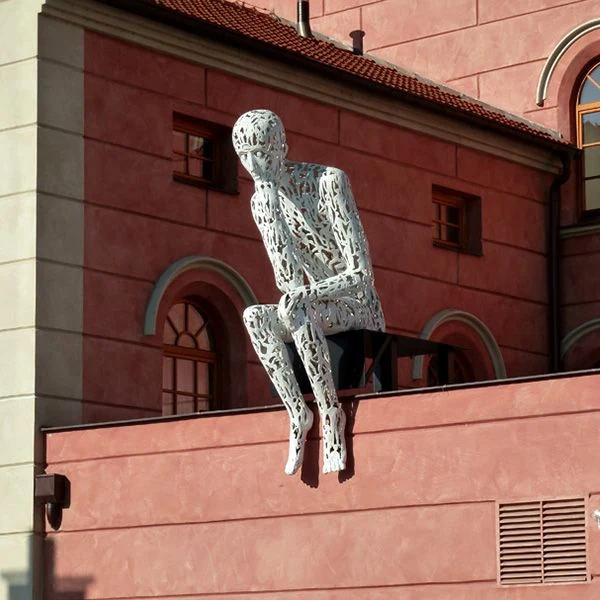
The goddesses will be watched from the roof of the Budweis hotel by Michal Trpák's “Thinker”, who once already sat down on the square in Budějovice in dialogue with a colleague. This time he returns to the city alone — perhaps because thinkers are few, and fewer all the time, and our hectic, arrogant age lacks people who do not make hasty or self-serving decisions.
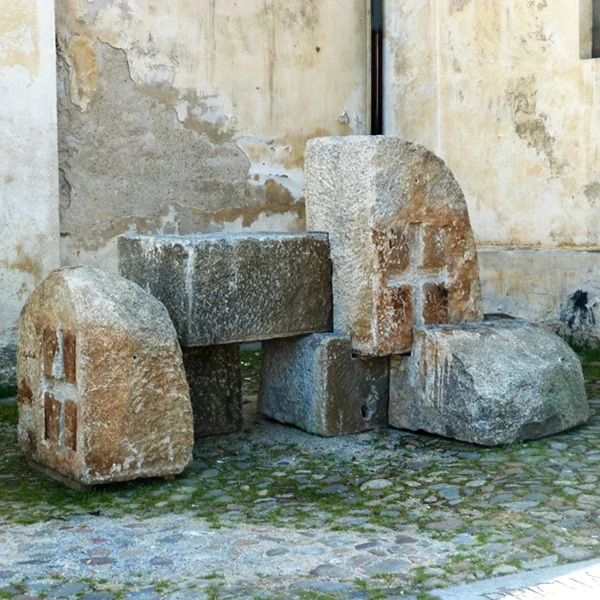
Another memento is the “monument to the Barabs” by Václav Fiala, which takes over a corner by the Piarist monastery. The Barabs were the builders of the railways, above all the men who drove the tunnels through hills and mountains. The monument is assembled from granite blocks from the railway bridge on the Plzeň — Bayerisch Eisenstein line.
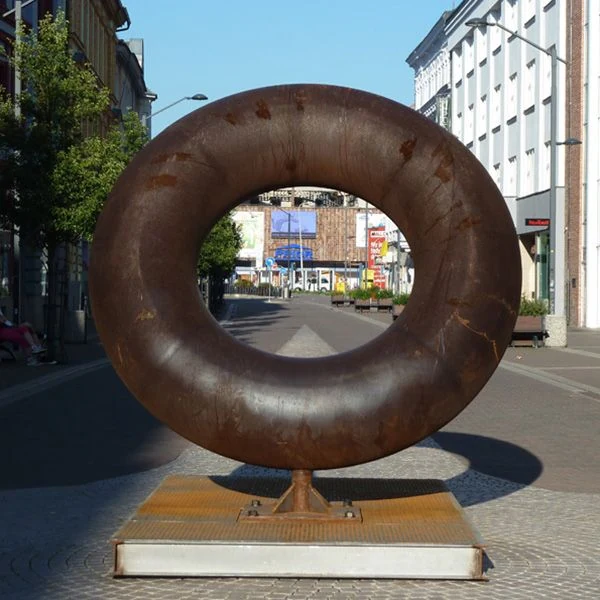
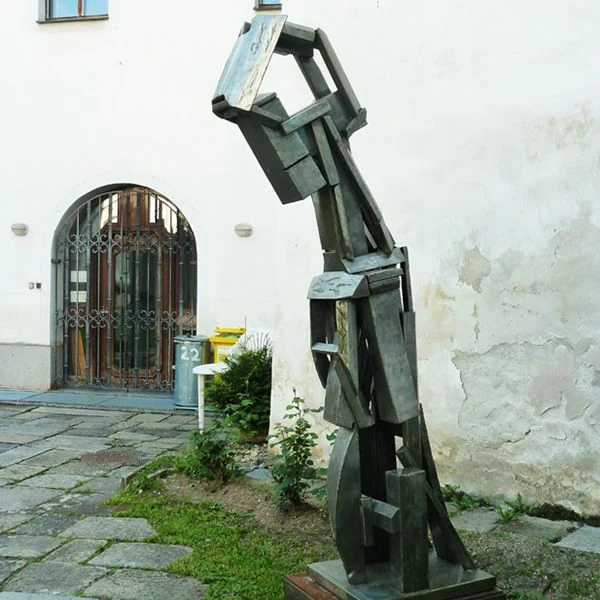
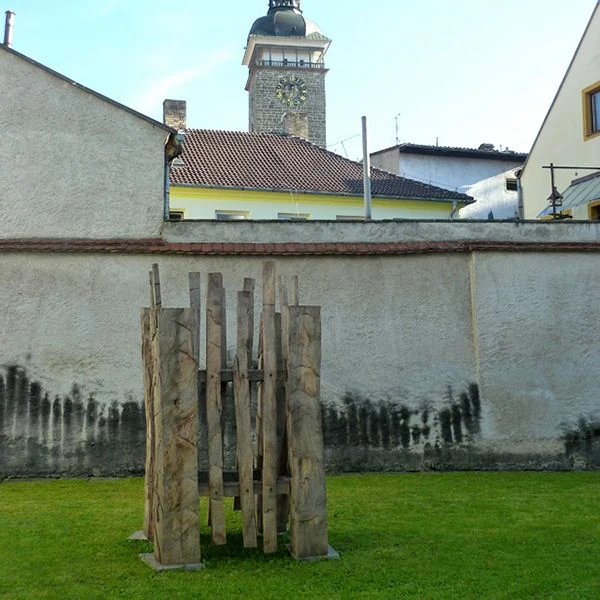
At the Wortner House the sculptures have taken over the courtyard: Ivan Tlustý's wooden “Little Garden” has grown there, watched over by Jakub Flejšar's “Half-figure”. And onto the pedestrian zone has rolled Lukáš Rais's massive ring “Torus” — in mathematical terms a surface of revolution created by rotating a circle about an axis that lies in the same plane and has no points in common with it.
Eleven kilometres further on, at Hluboká, ten sculptures will be placed in all. So far only five have been installed. Two of them have settled in the chateau garden by the entrance to the Aleš South Bohemian Gallery. One floats in the space of the Orangery, since the form of Jaroslav Chramosta's sculpture is freely inspired by the “Manta”; the other, Václav Krčál's “Landscape II”, will sit on an old plinth behind the riding hall.
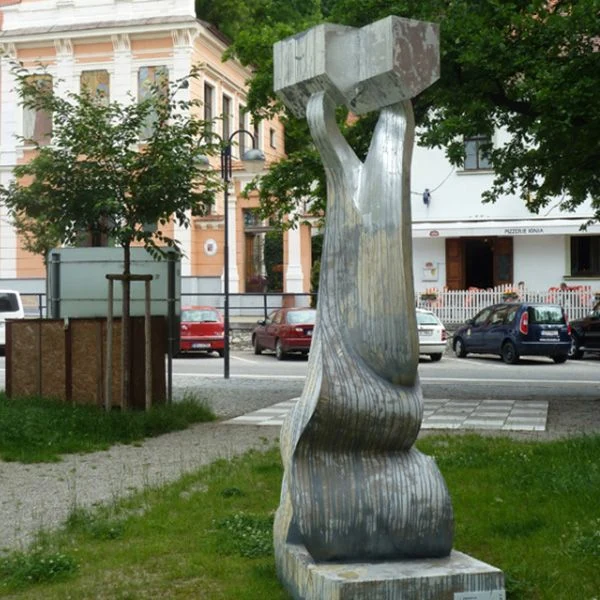
In a small park in the town, Jaroslav Koléšek's “Leonardo's Heart”, partly bound in stone and partly freed from it, will resonate into the landscape. Beside the church, residents and visitors to Hluboká can see Jan Šneberger's “Homeland”. At the Hamry landing stage there are trees, an untitled sculpture by Šárka Mikesková.
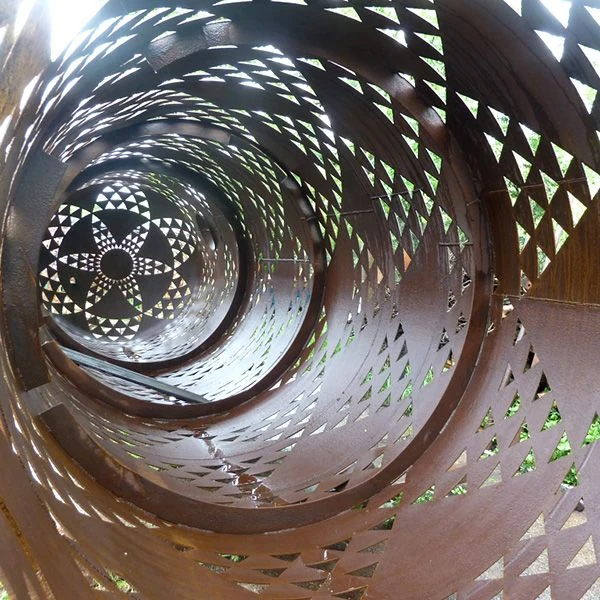
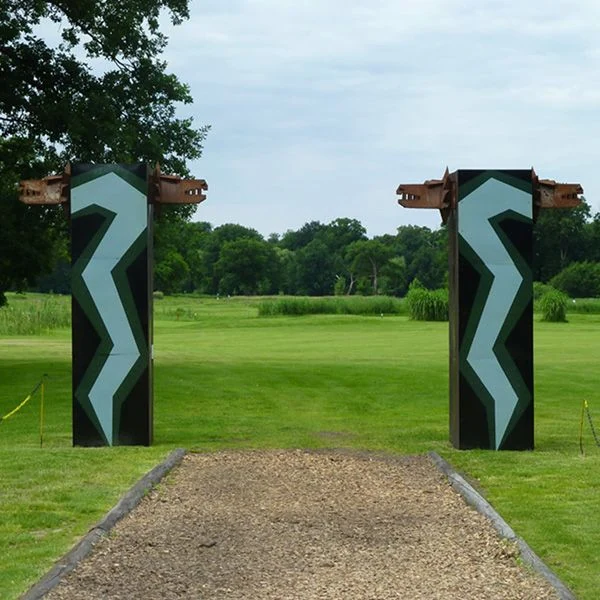
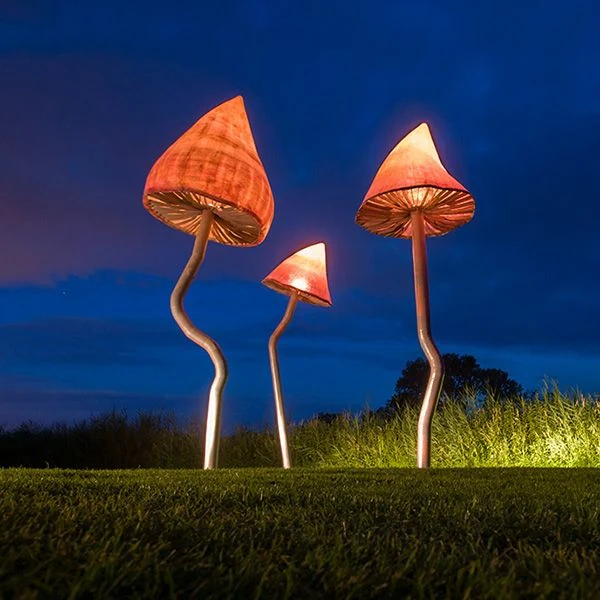
Near the golf course you can walk through Olina Franco's “Dragon Gate”. Further sculptures will be installed two weeks after the opening, as flooding made installation on and around the golf course impossible. These are Ivan Tlustý's Vaults, Jakub Flejšar's Bench, Martin Pertl's On a High Leg and Michal Trpák's Searching for Happiness.
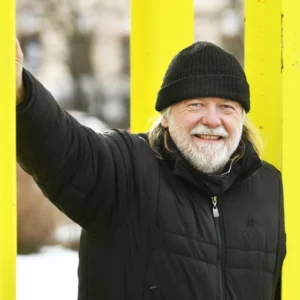
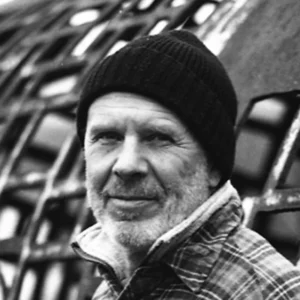
Michal Trpák
sculptor and founder of the exhibition