Jaroslav Róna
(* 1957, CZ)
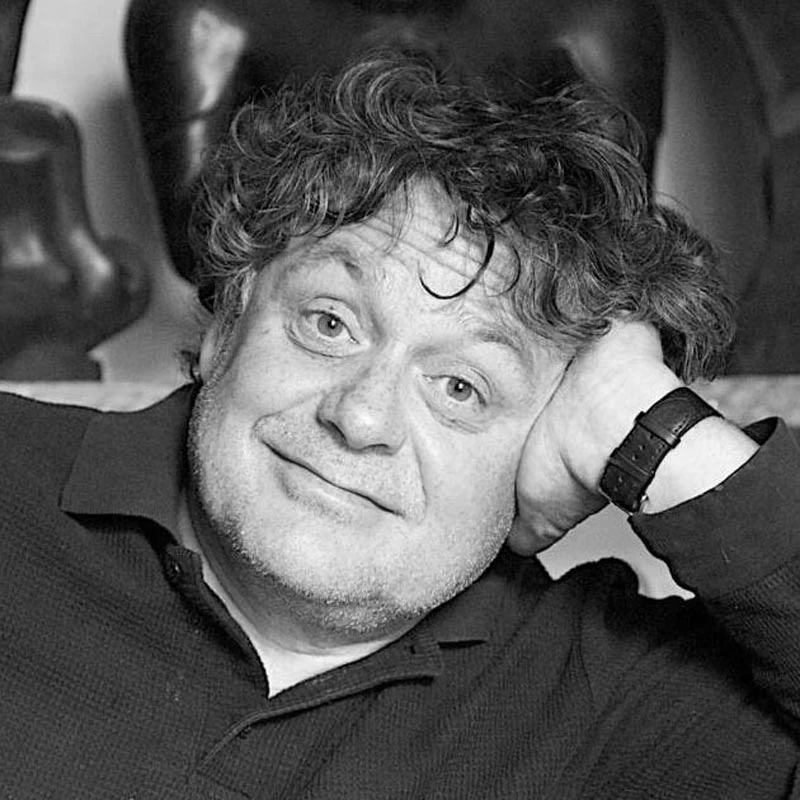
Jaroslav Róna was born on 27 April 1957 in Prague. He was not accepted to art school at first, and so from 1972 to 1975 he trained as a furrier. From 1975 to 1978 he studied at the Secondary School of Applied Arts on Hollarovo náměstí in Prague and then, from 1978 to 1984, at the Academy of Arts, Architecture and Design in Prague, in Professor Stanislav Libenský’s glass studio. His diploma work — the glass sculptures “Big Dog and Little Dog” — is now owned by the National Gallery.
In the mid-1980s he taught at the Pilchuck Glass School in Washington State, USA. In 1987 he became one of the founding members of the artists’ group Tvrdohlaví, which alongside him included Jiří David, Stanislav Diviš, Michal Gabriel and Petr Nikl — the group was among the most prominent in Czech art after the revolution.
A decisive moment in his career came in 2000, when he won the competition for a monument to Franz Kafka for the Jewish Town in Prague; the design won him the Grand Prize of the Union of Architects. The bronze sculpture, inspired by motifs from Kafka’s story, was unveiled in 2003 in Dušní street in Prague. From 2005 he headed the sculpture studio at the Academy of Fine Arts in Prague.
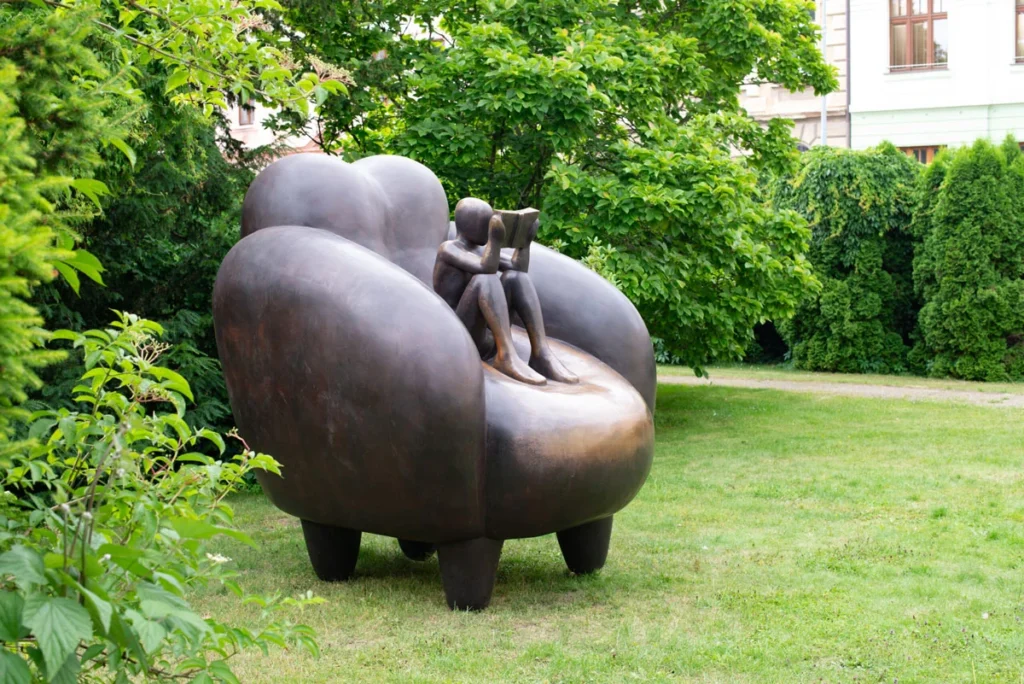
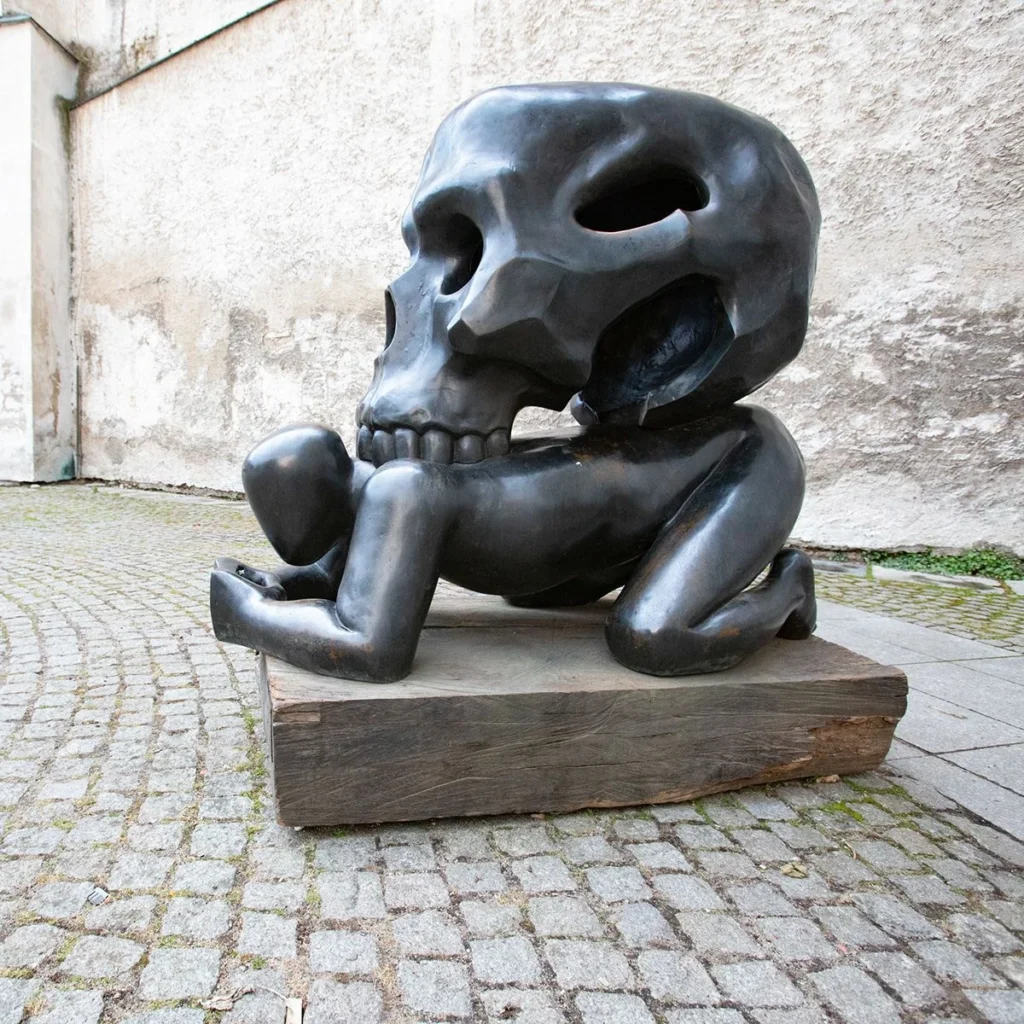
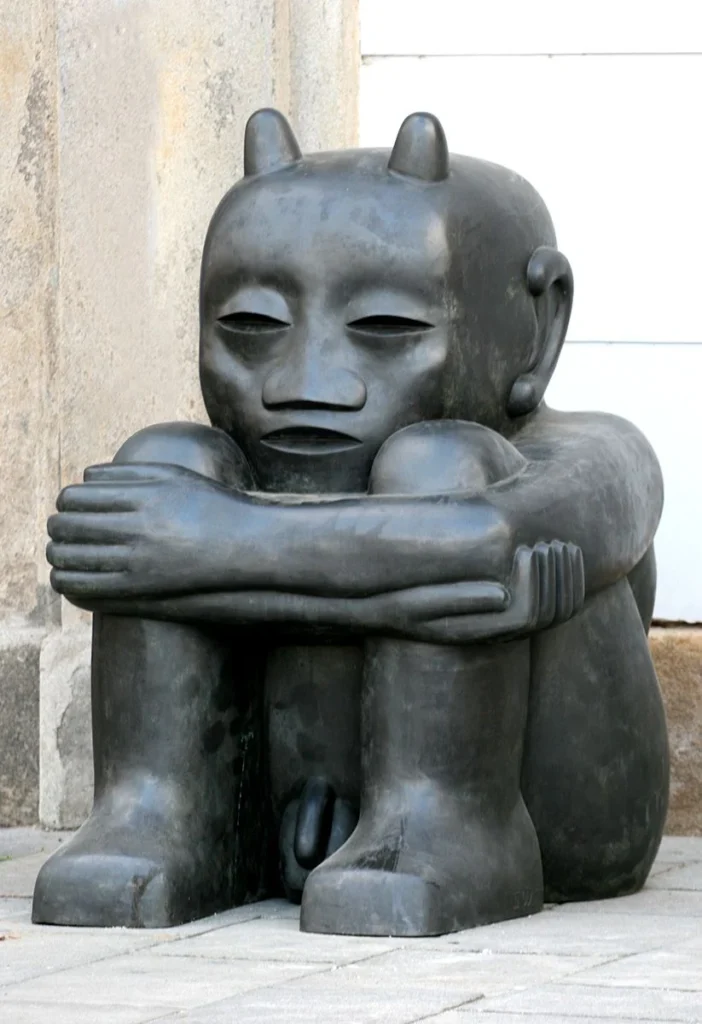
Róna is the author of a number of works in public space — in Prague these include The Reader in an Armchair on Franz Kafka Square, the Rhinoceros on Jungmannovo náměstí and the ten-metre Red Giraffe in Prague-Pankrác. Outside Prague there is above all the equestrian statue of Margrave Jobst on Moravské náměstí in Brno and the Fabled Ship on the embankment in Bratislava.
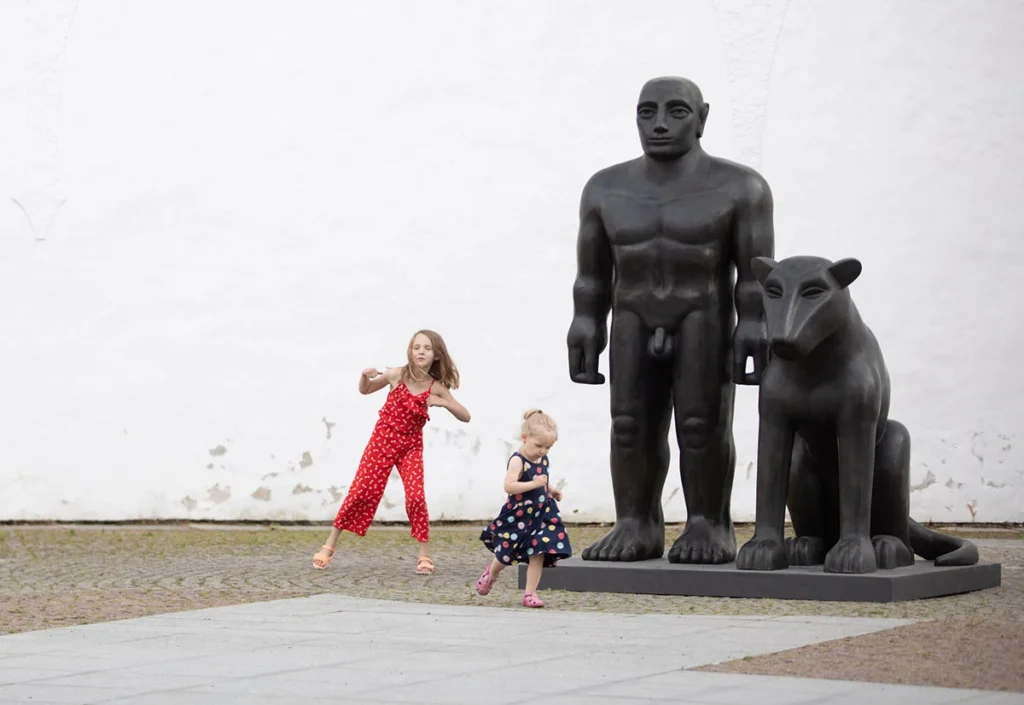
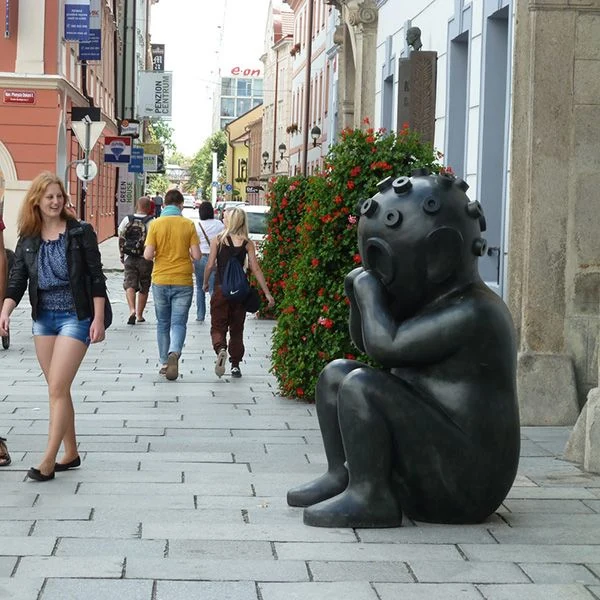
Besides sculpture, Róna works in painting, drawing, ceramics, glass, printmaking, stage design and in literature and theatre. South Bohemia knows Róna above all through the Art in the City festival, in which he has been a long-standing and almost regular participant — among other things he showed the bronze sculptural group Man and Dog here.